Help Us to keep our shelter
War is usually told through maps, figures, and human decisions. However, in almost every modern armed conflict, there has been a constant and silent presence that rarely occupies a central place in the narrative: dogs. Without understanding the political causes or the interests at stake, thousands of dogs have been incorporated into war zones for their physical, sensory, and behavioral capabilities, performing key roles that have had direct consequences for human survival.
A Bond Forged for Conflict
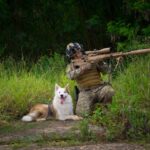
The use of dogs in war zones stems from a historical relationship between humans and animals based on cooperation. Throughout history, armed forces have recognized dogs’ abilities that surpass human limitations in extreme environments. Their olfactory capabilities, physical endurance, and trainability have made them valuable allies in scenarios where technology is not always sufficient or accessible.
Unlike other resources used in warfare, dogs are not inert tools. They are sentient beings that react to their environment and the people around them. This responsiveness has been one of the main reasons for their incorporation into high-risk contexts.
Life-Saving Roles
In armed conflicts, dogs have fulfilled multiple operational roles. One of the most documented is the detection of explosives and landmines. Thanks to their highly specialized sense of smell, they can identify buried or camouflaged hazardous substances, significantly reducing the risk to people in these areas.
Another important function has been the search and rescue of people in situations of structural collapse or active combat. In scenarios where buildings are destroyed and human access is limited, dogs can move through rubble and indicate the presence of survivors.
They have also been used for surveillance and early warning tasks. Their ability to detect unknown movements, sounds, or presences allows for anticipating risks and protecting human lives.
A role that remains relevant.
Talking about dogs in war does not imply glorifying conflict or taking sides. It implies recognizing that, in scenarios created by human decisions, other living beings participate without having chosen to do so. Dogs do not distinguish between sides, ideologies, or borders. They respond to the bond, the training, and the trust placed in them.
Recognizing their role allows us to broaden our perspective on interspecies cooperation and the ethical responsibility that exists when involving animals in contexts of violence. When war has four legs, it also has a history of collaboration, capability, and service that deserves to be understood and told.
Sources
• National Geographic. Dogs of War: The History of Military Working Dogs.
• Encyclopaedia Britannica. Military working dog.
• International Committee of the Red Cross (ICRC). Animals and armed conflict.
• Frontiers in Veterinary Science. Research on working dogs in extreme environments.
• American Veterinary Medical Association (AVMA). Working dogs and operational roles.
Together, we can create a brighter future for our four-legged friends. 🐾